From Australia to Tokyo: surveying the next chapter in warehouse automation
Senior Surveyor Chris Radcliff, from our Australian team, recently travelled to Japan to support survey work at a large automated warehouse in Tokyo. He combined specialist expertise with local teamwork to help plan the next phase of automation.
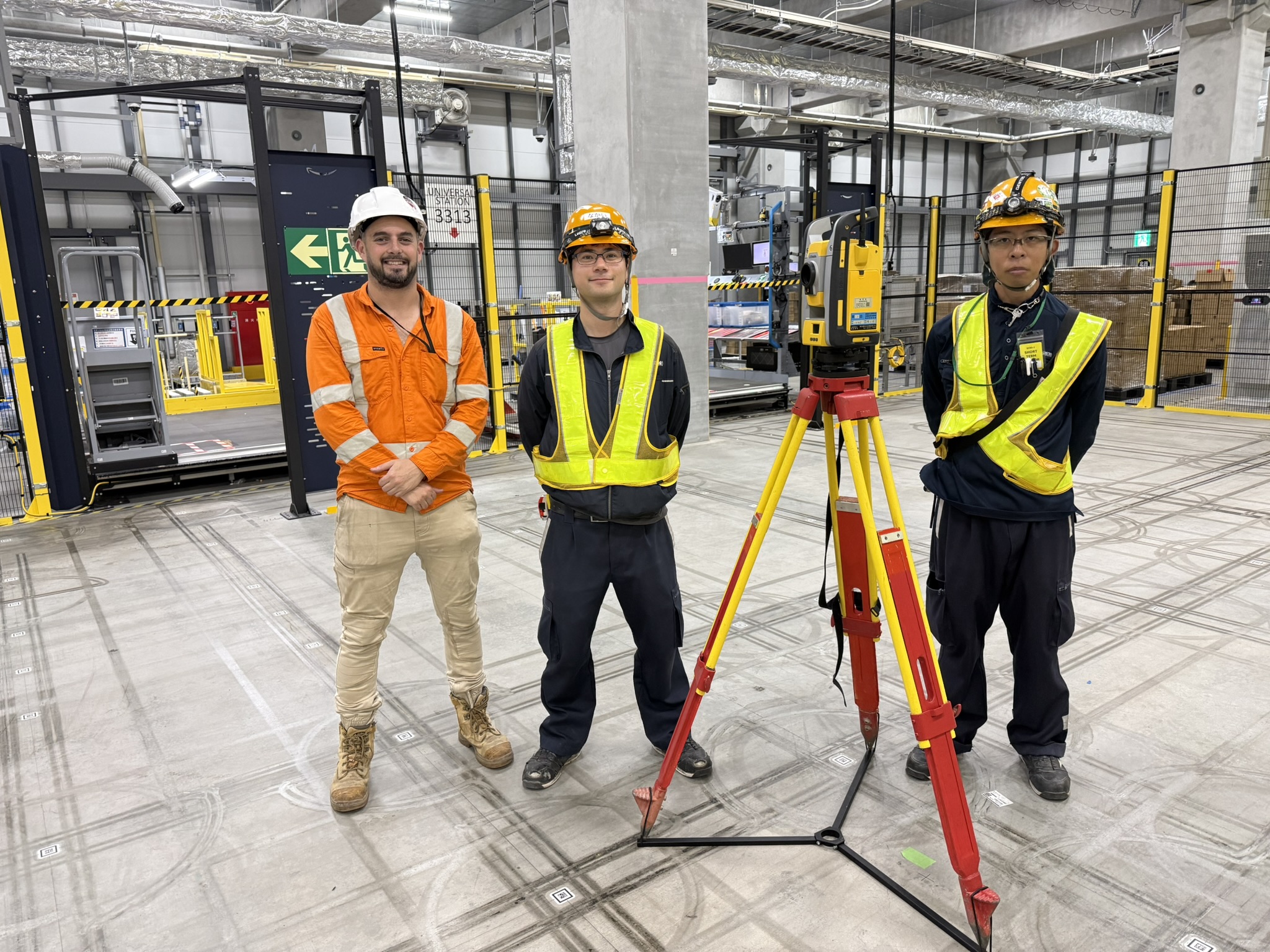
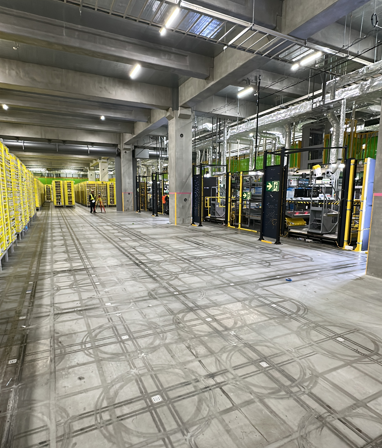
A week in Tokyo offered a change of scenery for Chris, whose visit focused on controlled laser scanning and survey work at a large automated warehouse. While he was working across the facility’s autonomous robot (AR) floor, he captured the spatial information needed. This information will assess how new automation infrastructure could be introduced into the existing operation.
The project is a reminder that even in a highly automated environment, accurate surveying has a vital role to play. Before new equipment can be installed, the design team needs a clear understanding of what is already there. In addition, they must know how the proposed additions will fit alongside it.
Mapping the robots’ reference points
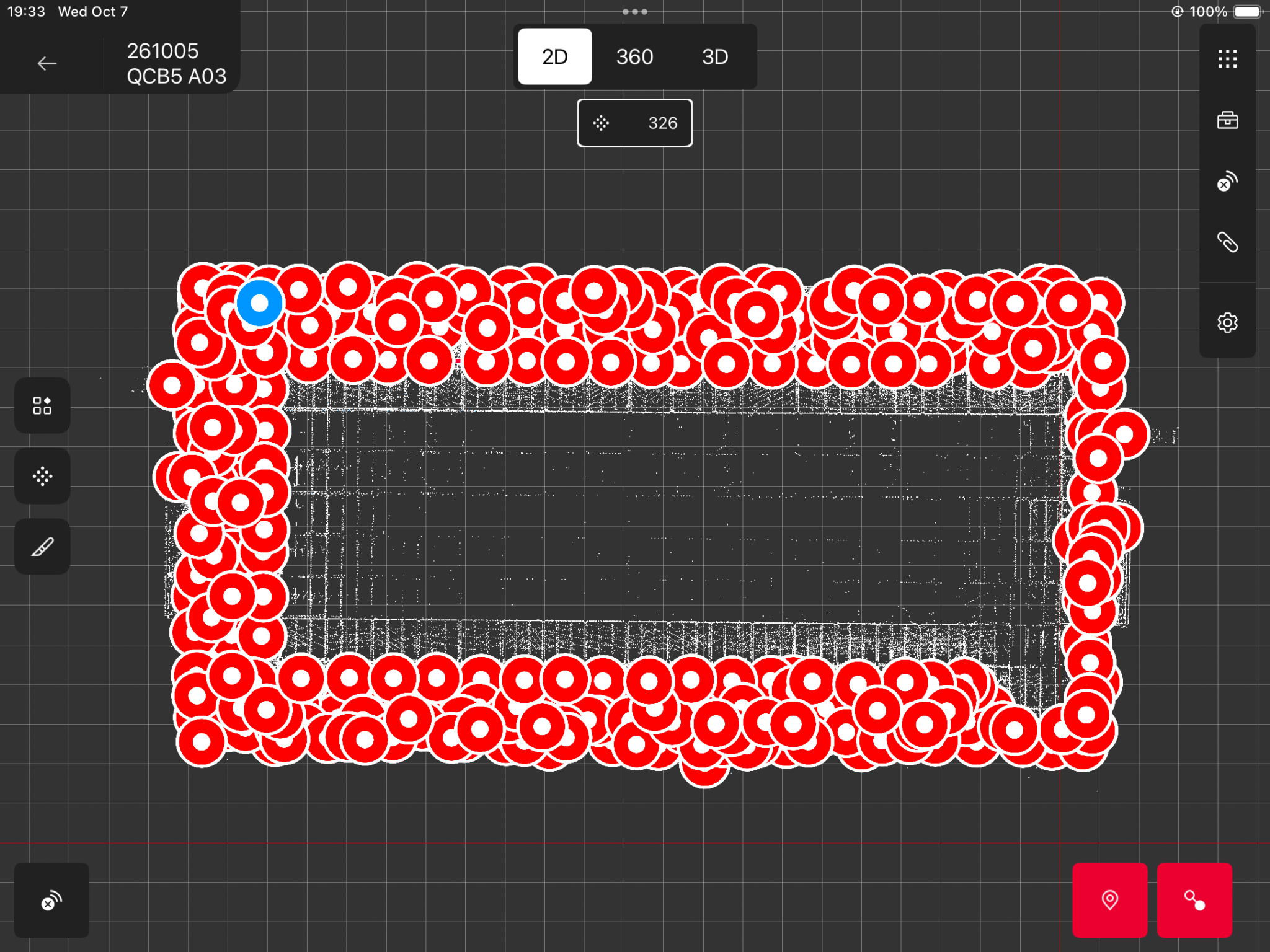
One of the key requirements was accurately capturing and coordinating the fiducial markers used by the robots for navigation. These markers provide the reference points that guide automated movement throughout the warehouse. Chris describes them as the “highways” that help the robots find their way around the facility.
Their positions needed to be accurately integrated with the laser scan data. This allowed the project team to work from a coordinated picture of the floor and its navigation references. Moreover, this was an essential part of preparing the information for the next stage of design.
Planning upgrades before installation
The resulting point cloud and survey dataset will be used to assess how the proposed automation infrastructure can be integrated into the warehouse. Furthermore, it will support clash detection, checks on available clearances and design coordination before installation begins.
By reviewing the proposed additions against the surveyed environment, the project team can identify potential conflicts. They can also understand where space may be constrained. The planned upgrades aim to improve the efficiency and capability of the facility. These upgrades will bring new technologies into an already highly automated operation.
For Chris, the visit offered an opportunity to see how the information collected on site feeds directly into decisions about the future of a complex industrial facility.
Working together across languages
Beyond the technical work, one of the most rewarding parts of the visit was working alongside the local survey team. Delivering a project in a different country brings practical challenges. In particular, planning, site meetings and everyday coordination take place across languages.
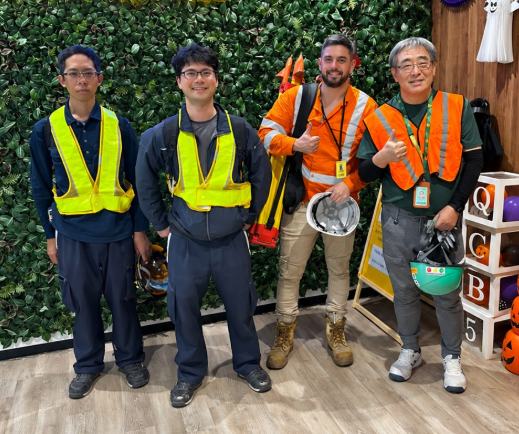
Chris worked closely with Shou and Fukuda, whose local knowledge and support were invaluable throughout the project. Besides, Shou’s ability to speak both English and Japanese made communication significantly easier. This helped the team coordinate their work and operate together seamlessly.
The experience highlighted the importance of combining specialist survey expertise with the knowledge of colleagues on the ground. It also gave Chris a first-hand example of how collaboration can connect teams across international borders.
Reflecting on the visit, Chris said: “It was a great opportunity to see firsthand how accurate survey data supports the planning and delivery of complex industrial projects, and another reminder that good surveying is a truly global profession.”
Damian Lee, Head of Operations, Infrastructure, added: “This was a great opportunity to demonstrate our capabilities in a new country. We knew it would be a challenge, but Chris, Shou and Fukuda did an amazing job and made it look easy! We hope this will be the first of many projects in Japan.”
Robots helping robots
The team hopes to return next year once the design phase is complete. This time, they will support the installation and setting out of the new infrastructure using HP SitePrint.
That would take the project from capturing the existing environment to helping translate the new design onto the warehouse floor. Additionally, robotic layout technology will support the next phase of automation.
As Chris put it: “There’s something quite fitting about using robots to help set out infrastructure for more robots!”
A fascinating assignment for Chris, and a great example of our Australia team bringing specialist surveying expertise to an international project. Thank you to Shou and Fukuda for their support throughout the visit.