By Gideon Simons, Strategic Pursuits Manager
The UK’s bridge infrastructure is entering a critical period.
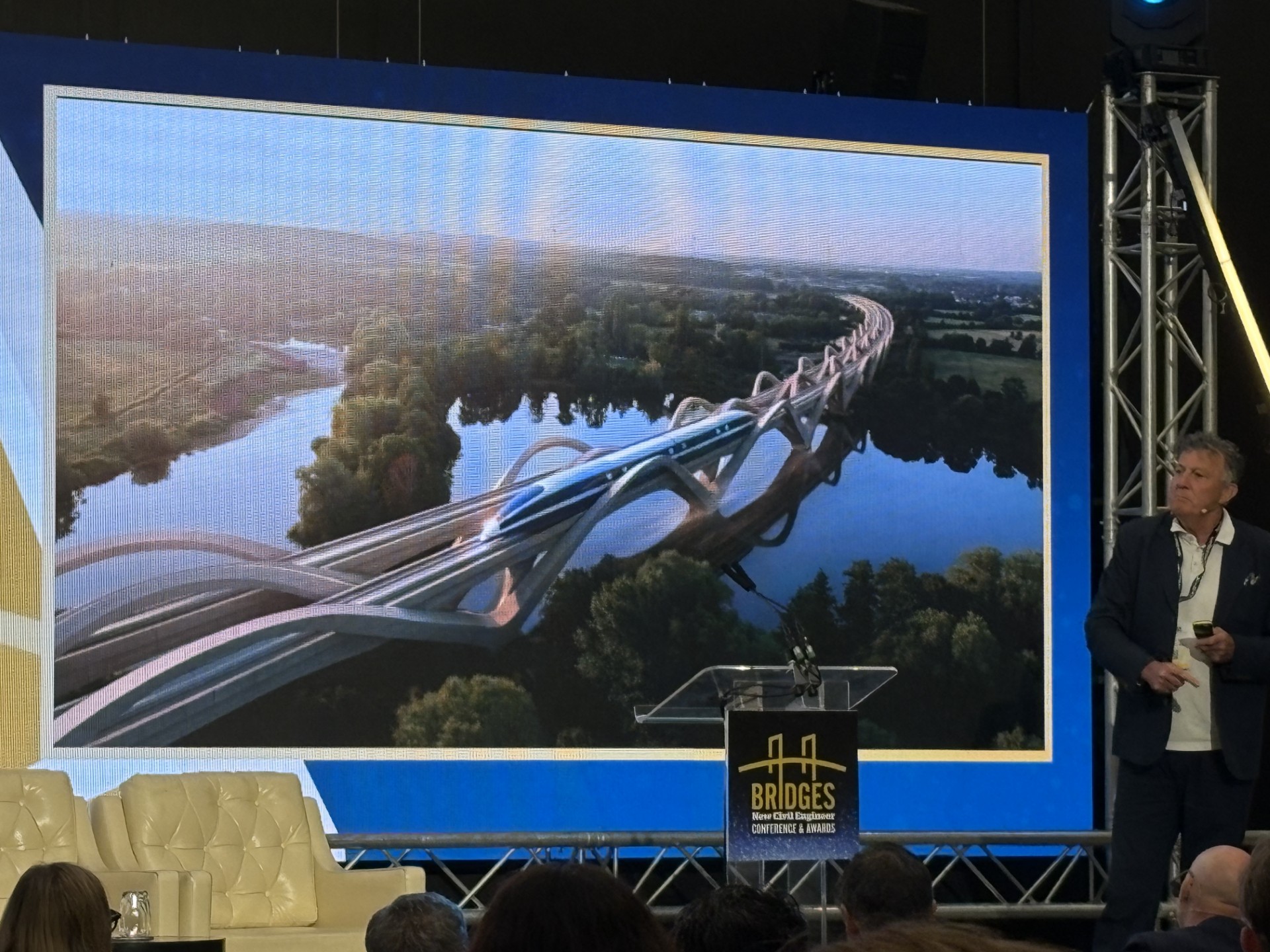
With more than 100,000 bridges across the country, many of them built for a very different era, asset owners face increasing pressure to extend structural life, manage constrained budgets and respond to changing environmental demands. Those challenges were at the centre of discussions at this year’s New Civil Engineer Bridges Conference & Awards in London, where industry leaders explored how better data, smarter inspection techniques and collaborative innovation can help shape the future of bridge management.
Across the day, one message emerged consistently: technology alone is not the answer. The real value lies in how we capture information, connect it and turn it into better decisions.
For organisations responsible for maintaining critical infrastructure, that means asking some fundamental questions:
- How can we improve the way asset data is captured, standardised and shared?
- How can emerging survey and inspection technologies be integrated into everyday asset management rather than remaining isolated innovations?
- What procurement and investment models are needed to support long-term infrastructure resilience?
These are questions that resonate strongly with the work we undertake at Plowman Craven.

Extending the life of ageing infrastructure
One of the keynote presentations came from Steve Denton, Vice President of the Royal Academy of Engineering, who explored the findings of the National Engineering Policy Centre’s work on ageing infrastructure. His central message was clear: one of the most significant contributions bridge engineers can make towards decarbonisation is extending the lifespan of existing assets through better maintenance and informed intervention.
He also highlighted several wider industry challenges, including:
- addressing the engineering skills gap
- securing longer-term government investment
- developing adaptable data standards
- increasing support for innovation.
Perhaps the most memorable analogy described deferred maintenance as taking an “asset holiday”, a short-term saving that ultimately creates a larger debt to repay in the future. It was a simple but powerful reminder that proactive asset management is both an engineering and financial necessity.

Inspection technologies are evolving rapidly
Another fascinating session came from Colin George, Deputy Head of Structures at National Highways, who shared progress from the organisation’s ambitious Structures Moonshot programme.
The programme is exploring advanced non-destructive testing technologies capable of revealing structural information that traditional inspection methods cannot access. Among the innovations discussed were:
- Muon Tomography
- Guided Wave testing
- Quantum sensing and gradiometry.
These technologies have the potential to improve confidence in inspection findings while reducing intrusive investigations and enabling more targeted maintenance interventions. National Highways’ work demonstrates how emerging technologies are beginning to move from research into practical application.
For organisations managing extensive infrastructure portfolios, the next challenge is understanding how these techniques can be incorporated into broader asset management strategies to maximise their value.
Better data is the real opportunity
One of the strongest themes throughout the conference was the importance of connected data.
From discussions around digital platforms and machine learning to conversations with participants in the Early Careers Challenge, it was clear there is growing recognition that fragmented systems continue to limit the industry’s ability to make fully informed decisions.
Improving the way information flows between asset owners, engineers, surveyors and contractors has the potential to unlock significant efficiencies, helping organisations prioritise investment, reduce duplication and make better use of existing resources.
The technology already exists.
The challenge now is bringing those technologies together into workflows that genuinely improve outcomes.
From data collection to better decisions
At Plowman Craven, we see these conversations reflected in projects across the infrastructure sector.
Remote sensing, drone surveys, digital twins, structural monitoring, thermal imaging and advanced survey techniques are generating more information than ever before. Combined with intelligent data management and emerging AI capabilities, these technologies offer an opportunity to move from reactive inspection towards predictive asset management.
Collecting data is only the first step.
The real value comes from transforming that information into actionable insight that enables clients to make faster, more confident decisions about the future of their assets.

Looking ahead
This year’s NCE Bridges Conference reinforced that the future of bridge asset management will depend on collaboration as much as innovation.
As infrastructure continues to age, the sector must work collectively to develop consistent data standards, embrace emerging inspection technologies and invest in long-term asset stewardship rather than short-term fixes.
There is no single technology that will solve every challenge. However, by combining advanced surveying, digital inspection, structural monitoring and intelligent data management, the industry is well placed to build a more sustainable, resilient and cost-effective future for the UK’s bridge infrastructure.
As these technologies continue to mature, it will be exciting to see how they are adopted across the sector, and how organisations can work together to turn innovation into measurable improvements for infrastructure owners and the communities they serve.