
Noise Action Week is the UK’s campaign to reduce noise pollution. Running from 11–15 May 2026, it is led by the Institution of Environmental Sciences and supported by leading acoustics and environmental health organisations, including the Institute of Acoustics and the Association of Noise Consultants.
The campaign has a direct message: noise matters.
Noise is often framed as inconvenience or complaint. Noise Action Week pushes the conversation further, towards health, wellbeing and quality of life.
This year’s campaign places particular emphasis on the health impacts of noise and on practical action: what individuals, communities, local authorities and businesses can do to reduce unwanted noise and improve the environments people live and work in.
Noise is still often treated as tolerable background: subjective, difficult to pin down, and only really visible once a complaint is made.
A growing evidence base says otherwise.
Noise as a health issue
The European Environment Agency’s 2025 assessment describes transport noise as ranking among the top environmental health threats in Europe. The same assessment estimates that almost 16.9 million Europeans experience long-term annoyance due to transport noise, while approximately 4.6 million suffer severe sleep disturbance. It also states that, according to new research, noise could contribute to thousands of cases of depression and dementia.
The EEA has also highlighted emerging correlations between pollution exposure and mental health. In relation to environmental noise specifically, the EEA briefing reports correlations between road-traffic noise and small increases in the risk of depression and anxiety, as well as associations between environmental noise and behavioural issues in children.
The evidence should be applied carefully. Different sources, contexts and exposure patterns carry different risks, and no single metric can capture every impact. Even so, the direction of travel is clear: noise indicators are far more than compliance metrics. They are part of a growing evidence base linking environmental exposure with measurable effects on health and wellbeing.

Noise inequity
Noise Action Week also highlights a point that is central to good acoustic practice: noise is not experienced in the same way by everyone.
Two people can be exposed to the same sound level and respond differently. Context matters. Time of day matters. The character of the noise matters. So does whether someone has any control over it.
A passing train, a short burst of construction activity, or music from a nearby venue may each be temporary, but the effect can change significantly depending on when it happens, how often it happens, and who is affected.
There is also an inequality dimension. Some communities are more likely to be exposed to higher levels of environmental noise, or to experience those impacts alongside other environmental and social pressures. Some individuals may also be more sensitive to sound, including those whose hearing or sensory experience differs from what is typically assumed.
A threshold exceedance may tell us something important, but it does not tell us everything.
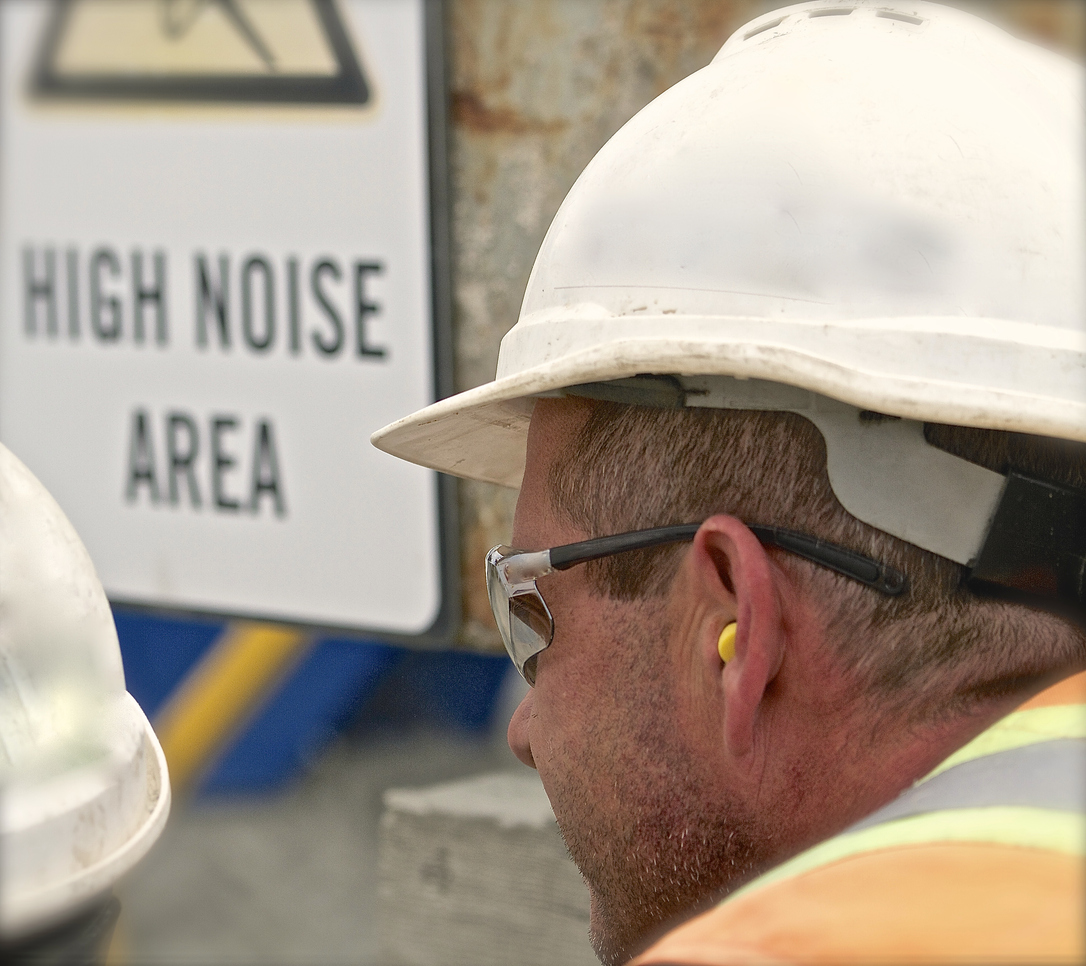
Noise in the built environment
That distinction is particularly relevant in construction, development and infrastructure, where noise is often managed through formal standards, consent processes and monitoring requirements.
For project teams, the practical question is whether noise is being managed as a real health and community impact, or primarily as a compliance requirement.
Most project teams recognise that construction noise needs to be considered. In practice, however, the process can become too mechanical:
Monitoring is specified. Equipment is installed. Reports are produced. Compliance is demonstrated.
A project can generate a lot of noise data without necessarily improving the management of noise. That is especially true where monitoring locations are selected primarily for practicality rather than representativeness, where alert levels are not clearly linked to site activity or receptor sensitivity, or where data is reviewed after the event rather than used to support decisions when they still matter.
The link between data and outcomes is not always clear. The industry needs to get better at closing that gap.
From measurement to management
Treating noise as a health and wellbeing issue changes the starting point.
Effective noise management should begin with receptors.
Who might be affected? When are they most sensitive? What activities are likely to create the greatest risk? How will noise travel through the surrounding environment? What does proportionate control look like for that specific site, programme and community?
Monitoring is most useful when those questions have already been considered.
Good monitoring starts with strategy, not equipment. In practical terms, this means choosing monitoring locations because they are representative and meaningful. Generic boundary measurements may be part of that strategy, but they only add value when they support better decisions.
Alerts should relate to site activity and receptor sensitivity. Data should be interpreted alongside programme, methodology, risks, complaints, community engagement and what is actually happening on the ground.
There is also a practical point around installation. Measurement quality depends not only on the instrument, but on how and where it is installed. Reflections, screening, localised sources and poor positioning can all affect whether the data is representative and defensible.
At Plowman Craven, this is where we see the role of noise and environmental monitoring evolving. Done well, monitoring helps project teams understand risk, evidence performance and act earlier, while there is still an opportunity to reduce all impact.

Supporting Noise Action Week
Noise Action Week gives the industry a useful moment to pause and look again at how noise is planned, monitored and managed.
For those involved in the built environment, support can start with practical actions already within reach:
- Engage earlier with local authorities, neighbours and sensitive receptors.
- Review whether noise is being managed around the most sensitive receptors, rather than relying on a generic site-boundary strategy.
- Check whether monitoring data is linked to decisions, actions and escalation routes.
- Feed lessons learned back into future specifications, monitoring strategies and site controls.
- Treat noise as a health, wellbeing and social value issue, not just a compliance item.
Noise Action Week asks us to recognise that noise affects people. The opportunity now is to make sure the way we plan, monitor and manage noise in a way that reflects that.
If you would like to discuss Environmental Monitoring further, please speak with our expert, Robin Honey, Environmental Services Director for Smart Monitoring: